After Last Orders: The Night-Shift Brewers Doing Their Best Work While Britain Sleeps
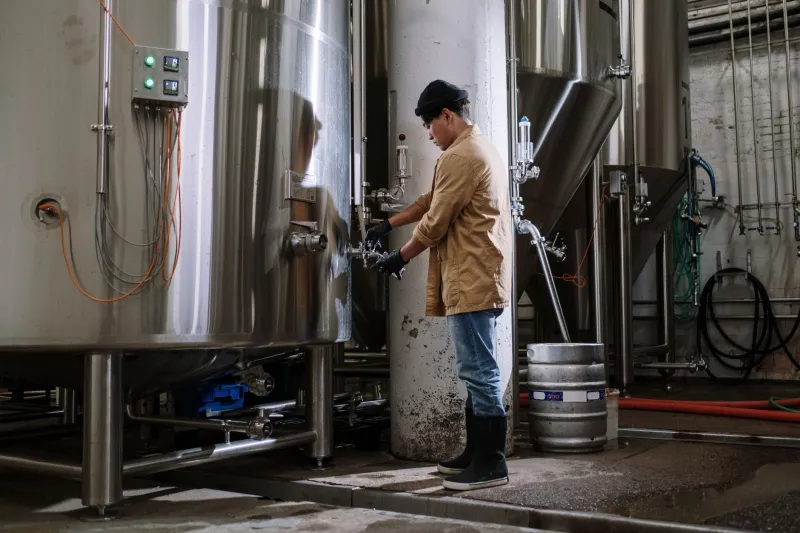
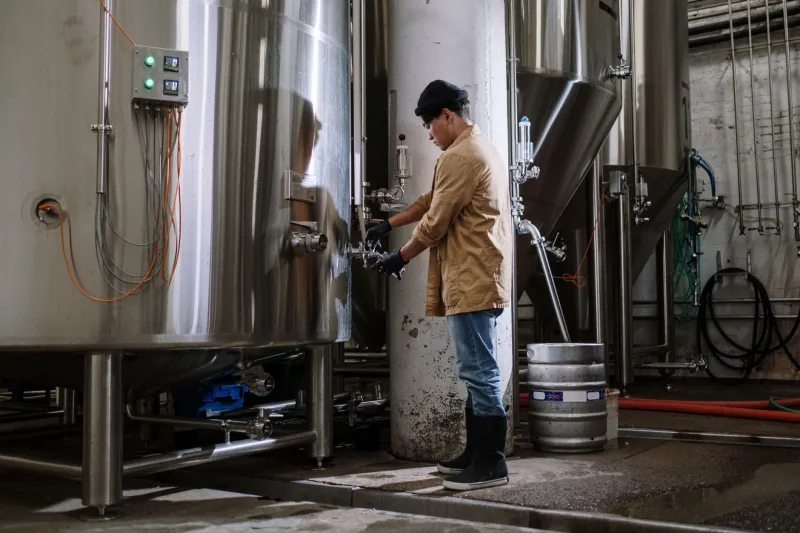
It's half past two in the morning somewhere in the backstreets of Sheffield, and Dan Hartley hasn't slept since yesterday. The mash tun is running, the grain smells extraordinary, and he's got a notebook open on the workbench covered in scrawled temperature readings and cryptic abbreviations that only he could decode. He doesn't look tired. He looks, if anything, quietly thrilled.
"Daytime brewing is production," he says, not looking up from the paddle he's using to check the consistency of the mash. "Night brewing is discovery."
Dan is one of a small but fiercely committed tribe of British brewers who've made the graveyard shift their natural habitat. While most of us are horizontal, these people are elbow-deep in fermenters, adjusting dry-hop additions by torchlight, and tasting experimental batches that may never see a tap list. It's obsessive, unglamorous, and — if you talk to anyone who does it — completely and utterly addictive.
Why the Dark Hours Make Better Beer
Ask a night-shift brewer why they prefer the hours between midnight and six, and you'll get a surprisingly consistent answer: nobody bothers you.
"During the day there are deliveries, phone calls, reps turning up, people wanting tours," says Priya Mehta, head brewer at a small craft outfit in Bristol that's built a cult following for its experimental saisons. "At night it's just you and the beer. You can actually think."
That uninterrupted focus matters more than it might sound. Brewing — particularly the kind of boundary-pushing, small-batch experimental work that defines Britain's most exciting craft producers — requires sustained concentration. Timing is everything. A hop addition that's three minutes late, a temperature that drifts two degrees in the wrong direction, a fermentation that kicks off faster than expected: any of these can alter the final character of a beer in ways that are difficult to predict and impossible to undo.
For Priya, the silence of the early hours creates a kind of sensory clarity that daytime simply can't offer. "Your nose works better when you're not distracted," she insists. "I know that sounds daft, but I genuinely believe it."
She's not alone in that conviction. Several brewers we spoke to described the night shift as almost meditative — a state in which they feel more attuned to the subtle signals a brew gives off as it develops. The hiss of CO₂, the particular colour of a wort under fluorescent light, the way a wild ale smells on day three versus day four of fermentation. These are the details that separate good beer from genuinely great beer, and they're easier to catch when the world around you has gone quiet.
Experimentation After Hours
For many night-shift brewers, the nocturnal hours aren't just about production — they're the unofficial R&D department of the brewery.
Marcus Webb runs a well-regarded microbrewery in rural Herefordshire that's become known for its adventurous use of local foraged ingredients. During the day, he and his small team produce the core range that pays the bills. After dark, Marcus experiments. His current project — a mixed-fermentation pale ale using wild yeast captured from a nearby apple orchard — has been running for the better part of four months, and he tends to it in the small hours like a particularly demanding houseplant.
"I wouldn't try something like this during normal hours," he admits. "It needs constant attention at certain stages, and I can't give it that when I've got other things pulling at me. The night shift is where I can sit with it, watch it, and actually understand what it's doing."
This kind of patient, hands-on experimentation is precisely what sets craft brewing apart from industrial production, and the night shift seems to be where much of Britain's most interesting beer is quietly being invented. The results don't always work — Marcus estimates that perhaps one in four of his experimental batches ends up being something worth repeating — but the failures teach him things that no amount of daytime reading or recipe tweaking ever could.
"You learn more from a batch that goes wrong at three in the morning than from ten that go right at noon," he says, with the cheerful pragmatism of someone who's poured a lot of bad beer down a drain.
The Physical Reality
It would be easy to romanticise all of this, and there's certainly a romantic element to the image of a lone brewer communing with their craft in the small hours. But the physical reality of night-shift brewing is considerably less poetic.
Breweries are not comfortable places to spend the night. They're cold in winter, sweltering in summer, and the floors are perpetually wet. Lifting grain sacks and shifting full fermenters is hard physical work at any hour; doing it at four in the morning, when your body is screaming at you to lie down, requires a particular kind of stubbornness.
"My back is rubbish," says Dan cheerfully. "My sleep pattern is non-existent. My social life is basically zero because I'm either working or recovering."
Priya describes a similar toll. She works nights three or four days a week during busy periods, and has largely given up trying to maintain a conventional schedule. "You adjust," she says. "Your body finds a rhythm eventually. But it's not for everyone, and I'd never pretend otherwise."
The partners, housemates, and families of night-shift brewers deserve their own acknowledgement here. More than one person we spoke to mentioned that their dedication to the after-dark brew had required significant negotiation at home.
What the Pint in Your Hand Owes to the Dark
Here's the thing worth sitting with next time you're nursing a particularly special pint in your local: there's a reasonable chance it was born in the small hours. The experimental batch that became the brewer's signature beer. The wild fermentation that took months of nocturnal attention before it found its character. The recipe tweaked and re-tweaked in near-darkness until it finally clicked.
Britain's craft brewing scene has always been driven by obsession — by people who care more about what's in the glass than almost anything else. The night-shift brewers are simply the most extreme expression of that obsession: willing to sacrifice sleep, social lives, and functioning sleep patterns in pursuit of something they can't quite articulate but would absolutely recognise the moment they tasted it.
Dan Hartley, when asked what keeps him coming back to the brewery at midnight, thinks for a moment before answering.
"The first taste of a batch that's done exactly what you hoped it would," he says. "Doesn't matter what time it is. That moment is worth everything."
Somewhere across Sheffield, a kettle is coming to temperature. The city is asleep. The beer is not.