What Your Pint's Temperature Is Really Telling You About the Pub Serving It
What Your Pint's Temperature Is Really Telling You About the Pub Serving It
You've been there. You order a pint of something you've had before — a reliable bitter, a well-regarded pale — and it arrives tasting somehow flat, sharp, or just wrong. The instinct is to blame the brewer. But more often than not, the brewery did their job perfectly. The problem crept in somewhere between the delivery lorry and your glass.
Cellar management is one of the least glamorous, least discussed, and most consequential aspects of running a proper pub. It's the invisible craft that separates a truly great pint from a mediocre one — and once you know what to look for, you'll never drink quite the same way again.
The Temperature Rule Nobody Talks About Loudly Enough
Ask any CAMRA-accredited judge what the single biggest giveaway of a poorly run cellar is, and most will say the same thing without hesitation: temperature.
Cask ale should be served between 11°C and 13°C. That's not a preference — it's the range at which the beer's carbonation, flavour compounds, and conditioning are in balance. Too cold and the CO₂ goes into solution, masking hop character and muting malt complexity. Too warm and the beer becomes over-lively, can taste sour, and deteriorates rapidly.
"A pint that arrives noticeably cold — I mean properly cold, like a lager — tells me immediately that the landlord either doesn't understand cask ale or doesn't care enough to manage it properly," says one veteran CAMRA branch judge who has assessed hundreds of pubs across the East Midlands over fifteen years. "It's usually done to hide faults. Cold suppresses the evidence."
Conversely, a pint that feels slightly warmer than you'd expect — especially on a hot summer afternoon — isn't necessarily a disaster. It may simply mean the cellar is working hard in unusual conditions. Context matters. But anything that makes you wince on the first sip deserves scrutiny.
Reading the Glass Before You Take a Sip
Before temperature, there's clarity. A hazy pint isn't automatically a sign of trouble — plenty of modern craft styles are deliberately unfiltered, and the bar staff should be able to tell you which ones. But unexpected haziness in a cask bitter or a traditional best is a red flag.
Haziness in a traditional ale usually means one of three things: the cask hasn't been allowed to settle and condition properly after delivery, the lines haven't been cleaned recently enough, or the beer is simply past its best. Responsible cellaring involves giving a newly delivered cask at least 24 hours — ideally 48 — to settle before it goes on sale.
"Rushing a cask is one of the most common mistakes," says a cellarman with over two decades of experience across tied houses in Yorkshire. "You get a delivery on Friday afternoon, the pub's busy, and you're tempted to tap it straight away. But you're robbing the customer if you do. That pint won't be what it should be."
The opposite problem — a pint that looks perfectly clear but tastes stale, cardboard-ish, or vinegary — points to a different failure: the cask has been on too long, or the lines haven't been cleaned. Most industry guidance recommends cleaning beer lines every seven days. In practice, some pubs stretch this considerably further. You'll know it when you taste it.
What the Handpump Action Tells You
If you're observant, you can learn a surprising amount from watching a pint being pulled before it reaches you.
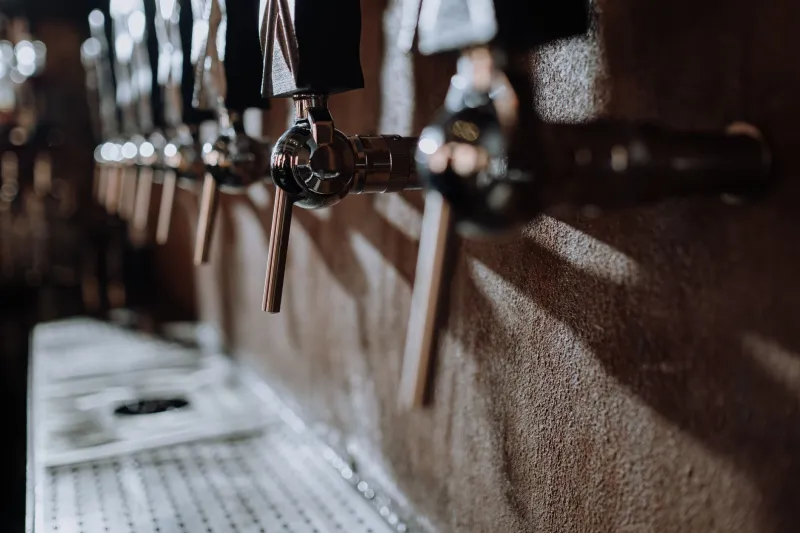
A healthy cask should offer consistent, smooth resistance on the pump. If the barstaff member is struggling with a sluggish, reluctant pull — or if the beer comes out in a rush with excessive foam — the cask is either nearly empty (the lees at the bottom can cause problems) or the spile hasn't been managed correctly. A soft spile, used overnight to allow the beer to breathe gently, should be replaced with a hard spile during service hours. Get this wrong and you'll have a pint that's either too lively or too flat.
None of this is complicated. But it requires attention, knowledge, and — crucially — a landlord or cellar manager who actually cares.
How to Spot Excellence (and When to Quietly Move On)
The good news is that excellence in cellar management is just as readable as neglect, once you know the signs.
A pub that takes its cellar seriously will often tell you so, in small ways. The bar staff will know which casks are freshest. They'll be honest about a beer that's "just gone on" and suggest waiting until tomorrow. They'll offer to replace a pint without argument if something seems off. The handpumps will be clean, the nozzles free of dried residue, and the drip trays emptied regularly.
If you're unsure, order a half first. It's not a sign of uncertainty — it's what any sensible drinker does in an unfamiliar pub. A good cellar will announce itself in the first mouthful: clean, bright, with a flavour that's true to the style. A poor one will give itself away just as quickly.
And if it does? Finish the half, pay up, and find somewhere that's earned your full pint. Life's too short for a badly kept cask.
The Unsung Heroes of the Perfect Pint
Cellar management rarely gets the recognition it deserves. Brewers win awards. Publicans get written up in guides. But the person who gets up at seven in the morning to check the cellar temperature, who turns a cask at precisely the right moment, who cleans the lines without being asked — they're the reason your Friday pint tastes as good as it does.
Next time you're handed something truly exceptional — that first cold-but-not-too-cold sip of a perfectly conditioned bitter on a Tuesday evening — raise a quiet glass to whoever's looking after things downstairs. They've earned it.