Rare, Revered, and Almost Impossible to Find: The British Beers That Built Their Own Religions
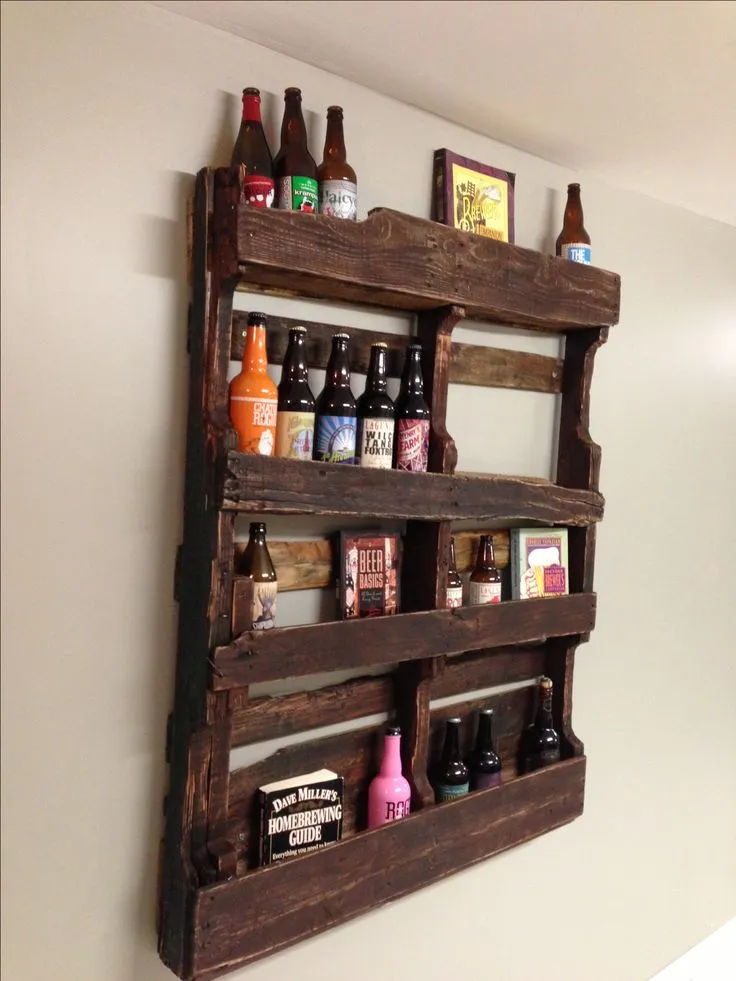
Photo: rare craft beer bottles collection cellar storage shelves, via i.pinimg.com
Some beers don't just get drunk — they get collected, traded, argued over, and mourned when they disappear. Britain has a quietly thriving subculture of drinkers who've gone well beyond enthusiasm into something that looks rather more like devotion. Meet the communities keeping obscure, discontinued, and limited-run British beers alive long after last orders.
On a Tuesday evening, somewhere in the north of England, a man is photographing a bottle of beer he has no intention of opening. Not yet, anyway. He's been waiting eighteen months for this particular release — a barrel-aged imperial stout from a small Yorkshire brewery that produces it once a year, in limited quantities, and distributes it in a manner that can only be described as deliberately chaotic. There's a mailing list. There are allocation windows. There are, inevitably, people who try to game the system and are quietly removed from future rounds.
This is the world of British beer cult followings. It's stranger, more passionate, and considerably more organised than most people outside it would guess.
What Makes a Beer Become a Legend
The ingredients for cult status don't follow a straightforward recipe. Price helps, but it isn't decisive. Rarity matters enormously. Quality is almost always a prerequisite, but not always sufficient on its own. What seems to tip a beer from well-regarded into genuinely obsessed-over is something harder to define — a combination of story, scarcity, and the particular social energy that builds around a thing that not everyone can have.
Britain has its own distinct version of this phenomenon. Unlike the American craft beer scene, where hype culture has been somewhat more aggressively commercialised, the British version tends to run quieter and more community-driven. Facebook groups. WhatsApp chains. Informal swap arrangements conducted with the solemnity of diplomatic negotiations.
"It's not really about the beer in isolation," says one member of a collectors' group centred around the output of a now-defunct Midlands brewery that closed in 2019. "It's about the conversation around the beer. The shared memory of what it tasted like, the speculation about whether anyone's got bottles left, the occasional miracle when someone digs one out of their cellar."
That brewery's flagship strong ale — a deeply complex, slightly oxidised beast that divided opinion when it was available — now commands extraordinary prices in informal trading circles. A bottle that retailed for around £6 when the brewery was operating has reportedly changed hands for ten times that amount. Whether it still tastes good is, for the devoted, almost beside the point.
The Facebook Faithful
The organisational infrastructure of British beer cult followings is almost entirely social media-based, and Facebook groups in particular have become the unlikely home of some deeply serious beer culture. Groups dedicated to specific breweries, specific styles, or specific discontinued beers can run to tens of thousands of members — and maintain levels of activity that put many professional beer publications to shame.
One group, built around a beloved Scottish session ale that was quietly dropped from a major regional brewery's range in the mid-2010s, has become a kind of living archive. Members post photographs of old pump clips, share memories of specific pubs where they drank it, and maintain a running thread cataloguing any remaining stocks found in the wild. When a Fife off-licence discovered twelve cases in a back room last year, the post announcing it generated more than three hundred comments within an hour.
"People think it's just nostalgia," says one of the group's moderators. "And it partly is. But it's also genuine quality appreciation. That beer was better than most of what replaced it, and people know it."
Whether that's true is debatable. Memory is a notoriously unreliable tasting note. But the feeling behind it is completely real.
The Queue Culture
For currently-producing cult breweries, the physical manifestation of devotion is the queue. Britain has developed a modest but genuine culture of queuing for beer releases — something that would have seemed absurd a decade ago and now barely raises an eyebrow in certain circles.
A small Bermondsey brewery that releases a single-barrel farmhouse ale twice a year typically draws people from across the country, some arriving hours before the doors open. The release is announced with minimal notice. There are no pre-orders. The only way to get a bottle is to be there, in person, waiting.
"It's completely impractical," admits one regular who travelled from Leeds for the most recent release. "I know that. But there's something about the effort that makes the beer taste better. Or maybe it just makes the whole thing feel more worthwhile. I'm not sure there's a difference."
This is a sentiment that comes up repeatedly in conversations with serious beer enthusiasts: the idea that difficulty of acquisition is part of the experience, not a barrier to it. The queue is the ritual. The waiting is the preparation.
When the Beer Dies
Perhaps the most emotionally complex corner of British beer cult culture is the space around discontinued beers. When a beloved brew disappears — whether through brewery closure, recipe change, or simple commercial decision — the response from devoted drinkers can be striking in its intensity.
A well-known cask ale from a traditional West Country brewery was reformulated several years ago to reduce its alcohol content. The original version had a small but passionate following. When the change was announced, the reaction in online communities was swift and disproportionate — there were petitions, letters to the brewery, and at least one organised tasting event framed explicitly as a wake.
"People feel genuinely bereaved," says a beer writer who's been covering British craft culture for over a decade. "Which sounds ridiculous, but I think it speaks to how much these beers are tied up with identity and memory. It's not just a drink. It's a version of yourself at a particular time."
Some discontinued beers have been resurrected through community pressure. Others exist only in the memories of those who drank them and the occasional bottle that surfaces in a collection. A few have inspired homebrew attempts — dedicated drinkers trying to reverse-engineer something they loved from whatever tasting notes and old recipes they can piece together.
The Collector's Calculus
At the more acquisitive end of the spectrum, British beer collecting has developed its own logic and its own etiquette. Serious collectors tend to be sceptical of pure trophy hunting — the accumulation of bottles purely for status — and more interested in what might be called considered cellaring: the long-term storage and occasional careful opening of beers that genuinely reward ageing.
Barrel-aged stouts, strong barleywines, and certain vintage bottle-conditioned ales can improve significantly over years in proper storage conditions. The community around these beers is small but deeply knowledgeable, and the trading networks that have developed are built on trust and mutual respect rather than pure market logic.
"The people who are just flipping bottles for profit don't last long in these circles," says one collector. "It's not an investment community. It's a drinking community that happens to be very patient."
That patience — and the passion underneath it — is what makes Britain's beer cult followings genuinely fascinating. These aren't casual enthusiasts. They're people for whom a particular pint became something more: a connection to place, to memory, to a community of others who understand exactly why it matters. The beer is almost incidental. Almost.