Beyond the Plastic Furniture: How Britain's Outdoor Drinking Spaces Finally Grew Up
Photo: Bernt Rostad from Oslo, Norway, CC BY 2.0, via Wikimedia Commons
For decades, the British pub garden was an afterthought — a patch of cracked paving, a few wobbly picnic tables, and a parasol that hadn't been replaced since 2003. Something has changed. Across the country, independent breweries and forward-thinking landlords are turning their outdoor spaces into proper destinations, and the shift is quietly rewriting who goes to the pub and why.
There's a particular kind of British pub garden that lives in the national memory. The one with the overflowing ashtray on every table. The one where the grass has given up and become mud. The one where the children's play equipment looks like a minor health and safety incident waiting to happen, and the only food available outside is a packet of crisps someone's balanced on a fence post. We've all been there. Many of us have spent perfectly pleasant summer afternoons there, because the alternative was being inside and the sun was out.
That version of the outdoor drinking space is not dead — walk around enough market towns on a warm Saturday and you'll still find it, alive and well and faintly beloved. But alongside it, something genuinely new has been growing.
The Catalyst Nobody Planned For
It would be disingenuous to discuss the transformation of British outdoor drinking spaces without acknowledging what accelerated it. The enforced periods of outdoor-only service during the pandemic years pushed landlords and brewers to think seriously about their external spaces in a way that commercial logic alone had rarely managed. Suddenly, the car park wasn't just somewhere to park — it was the venue. The scruffy side alley became a terrace. The neglected beer garden got a heater, a canopy, and a rethink.
What surprised many in the industry was how much customers responded. Not just with relief at being able to drink in a pub again, but with genuine appreciation for spaces that had been designed with some actual thought. When restrictions lifted, a significant number of drinkers didn't rush back inside. They stayed out.
"We realised the outdoor space was competing with the bar, not just supplementing it," says the owner of a craft brewery taproom in East Lancashire that underwent a significant garden redesign during this period. "And if it was going to compete, it had to be worth spending time in."
His solution was a long-term project: raised beds planted with herbs and wildflowers, a wood-fired pizza setup, and a series of covered booths built from reclaimed timber that feel more like a Scandinavian campsite than a traditional pub garden. The brewery's own beers are served from a converted shipping container at one end. On summer weekends, it books out.
The Urban Reinvention
In cities, where outdoor space is scarce and expensive, the reinvention has taken different forms. Rooftop bars attached to urban breweries have become a genuine phenomenon in London, Manchester, and Bristol — spaces that offer something a traditional pub simply can't: elevation, views, and the particular pleasure of drinking good beer somewhere that feels genuinely unexpected.
A south London brewery that opened its rooftop space three summers ago describes the demand as "genuinely shocking." The space holds fewer than a hundred people. It has a waiting list. The draw isn't just the beer — it's the combination of the beer and the experience of being somewhere unusual, somewhere that requires a little effort to reach, somewhere that feels like a discovery.
"People want to feel like they've found something," the brewery's events manager explains. "A rooftop does that. It's not just a garden — it's a destination. You tell people about it. You bring people to it. That word-of-mouth is worth more than any advertising we could do."
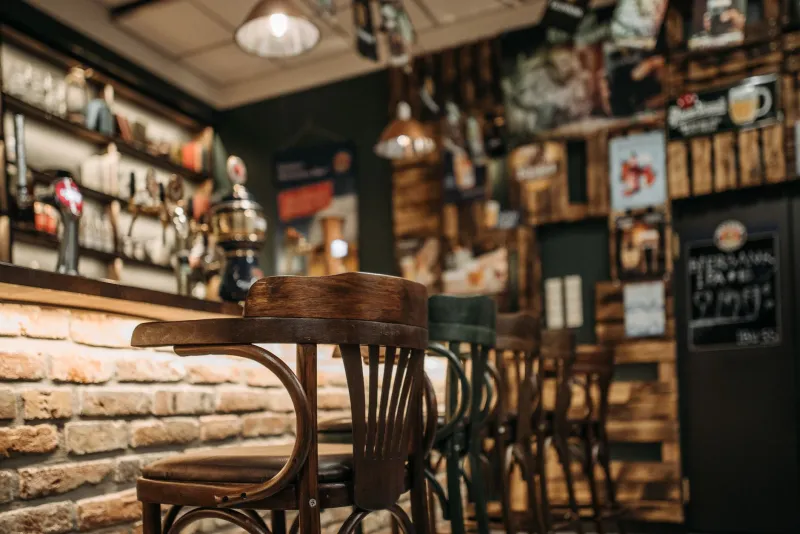
Not every urban solution reaches skyward. A Bristol taproom converted a narrow courtyard that had previously been used for deliveries into a covered outdoor space with exposed brick, trailing plants, and a carefully curated playlist that changes by the hour. It seats thirty people at most. It's consistently one of the most-photographed drinking spots in the city.
The Rural Rethink
In the countryside, the approach has been different again — and in some ways more radical. Several rural breweries and gastropubs have moved beyond the idea of the garden as a pleasant place to sit and towards something closer to a landscape experience.
A Herefordshire brewery that sits on the edge of farmland has developed what it describes as a "meadow taproom" — a section of the adjacent field that's been sown with wildflowers, fitted with low-level benches and fire pits, and left deliberately unmanicured. There are no parasols. There's no decking. The beer comes in cans from a hatch in the barn wall. Dogs are not just welcome; they appear to be a primary audience demographic.
"We wanted it to feel like you were drinking in the landscape, not despite it," says the brewer. "The beer is made here, from ingredients grown nearby. The space should feel like it belongs here too."
This philosophy — call it outdoor terroir — is quietly spreading. A number of breweries have begun planting hop gardens adjacent to their taproom spaces, allowing drinkers to sit among the very ingredients going into their glass. It's theatrical, yes, but it's also genuinely evocative in a way that plastic furniture and a branded parasol simply isn't.
Who's Showing Up
The demographic shift that's accompanied the transformation of outdoor drinking spaces is worth examining. The traditional British pub garden was largely a family space in summer — somewhere to park children while adults had a drink. That function hasn't disappeared, but it's been joined by something broader.
Younger drinkers, who research suggests have been drifting away from traditional pub culture, appear more likely to engage with spaces that feel designed and considered. The outdoor taproom, the rooftop bar, the wildflower meadow — these are spaces that photograph well, that feel worth sharing, and that don't carry the slightly musty associations of the traditional indoor pub for a generation that didn't grow up in them.
"We see groups in their twenties who tell us they don't really go to pubs," says the East Lancashire brewer. "But they come here. Something about the space feels different to them. It doesn't feel like what they think a pub is."
Whether that's a good thing for pub culture broadly is a reasonable question. There are traditionalists who worry that the Instagram-ready outdoor space is pulling focus from the thing that actually matters — the beer in the glass and the conversation around it. The concern isn't entirely without merit.
But there's another way to look at it. Every drinker sitting on a reclaimed timber bench in a wildflower meadow, or on a rooftop overlooking a city skyline, or in a hop garden in Herefordshire — all of them are drinking British beer. All of them are supporting British breweries. And most of them, if the beer is good enough, will come back. Probably inside next time.