Not What It Says on the Tin: How to Tell Real Craft Beer From the Clever Impostors
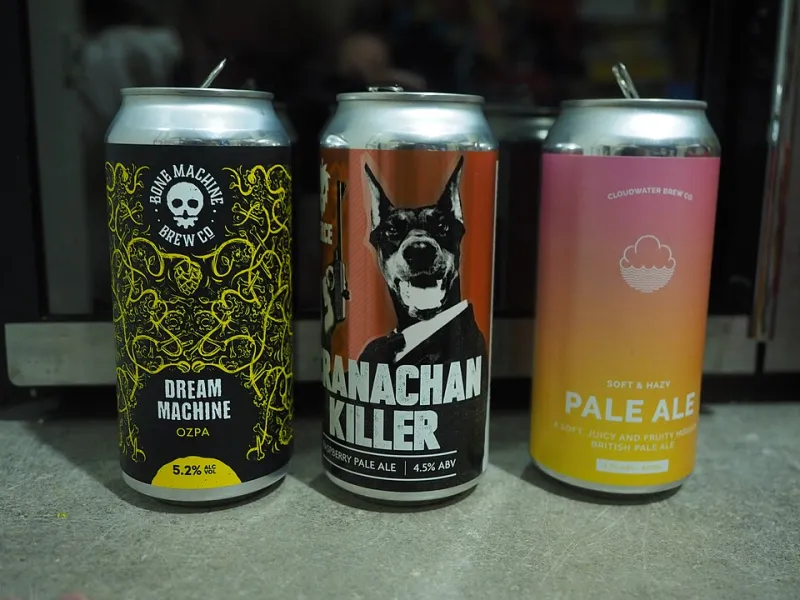
Photo: JIP, CC BY-SA 4.0, via Wikimedia Commons
Craft beer has a branding problem. Not the kind that marketing consultants fret about, but a more fundamental one: the word "craft" means nothing legally in the UK. Anyone can slap it on a label. Any pub can write it on a chalkboard. Any supermarket can stick it on a shelf. There's no governing body, no certification, no protected status — which means that alongside the genuinely brilliant independent breweries doing extraordinary work, there's a growing grey area of beer that talks the craft talk without walking the walk.
This isn't about snobbery. It's about honesty. If you're paying craft prices, you deserve craft beer.
The Rise of the Faux-Craft Label
The most common form of misrepresentation isn't outright forgery — it's obfuscation. Large multinational brewers have become adept at launching "craft" sub-brands with independent-sounding names, illustrated labels, and backstories designed to evoke the small-batch, passion-project aesthetic. These beers are often brewed at industrial scale, in facilities that have nothing to do with the romantic imagery on the can.
In the UK, brands like this have proliferated particularly in supermarkets and chain pubs, where buyers are less likely to scrutinise provenance. The giveaway is usually on the small print: look for the parent company name, often listed in tiny text near the barcode. If a "craft" IPA is ultimately produced by a major international drinks conglomerate, that's information worth having.
Jamie Okafor, head brewer at an independent craft brewery in Sheffield, has watched this trend with frustration. "We spend years building trust with our drinkers, being transparent about our ingredients, our processes, our values. Then someone with a fraction of our principles and a hundred times our marketing budget releases something that looks nearly identical. It's exhausting."
Reading the Label Like a Pro
Labels are your first line of defence, and learning to read them critically takes only a little practice.
Look for a brewery address. Genuine independent breweries are almost always proud of where they're from. A label that lists a brand name but no specific production location — or one that lists a registered office address rather than an actual brewery — should prompt questions.
Check the ABV against the price. Craft beer costs more to make because quality ingredients cost more. A 6.5% DIPA selling for £1.80 a can hasn't been brewed with the same care as one selling for £3.50. The economics simply don't allow for it.
Look up the brewery. It takes thirty seconds on a phone. Does the brewery have a real website? Are they on social media talking about actual brewing? Do they have a taproom you could visit? Genuine independent breweries leave a digital footprint that reflects real activity.
Examine the language. Phrases like "crafted with care" or "artisan-inspired" are marketing constructions that mean precisely nothing. Legitimate craft breweries tend to be specific: they name the hops, discuss the malts, explain the process. Vagueness is a warning sign.
In the Pub: What to Watch For
The pub environment presents its own challenges. Keg lines can be swapped without much fanfare; a font badge is easy to change. Some less scrupulous establishments have been known to serve cheaper beer under a premium brand name — a practice that's both fraudulent and, frankly, an insult to the drinker.
Trust your palate. If a beer you know well tastes off — flatter than expected, less aromatic, thinner in body — it's worth asking a polite question. Most landlords are honest and would want to know if something was wrong with a line. The ones who become defensive when asked are telling you something.
Free houses and independent pubs with genuine tap lists are generally a safer bet than chain venues. Landlords who've curated their own selection tend to know exactly what's flowing through their lines and where it came from.
What Breweries Are Doing About It
Some independent producers have started taking active steps to make verification easier for consumers. QR codes linking to batch information, numbered labels, and membership of independent brewing bodies like the Society of Independent Brewers (SIBA) all offer some reassurance. SIBA membership, in particular, requires breweries to meet specific independence criteria — it's not a perfect system, but it's a meaningful signal.
Okafor's brewery has started including a "brewer's note" on every batch — a brief, personal description of the brew written by whoever was responsible for it. "It's a small thing, but it's something a faceless industrial operation would never do. It's proof of a human being."
Supporting the Real Thing
Ultimately, the best protection against misrepresentation is knowledge — and the willingness to spend it wisely. Buying directly from breweries, either at taprooms or through their own online shops, removes any ambiguity about provenance. Visiting independent bottle shops staffed by people who actually know their stock is worth the extra mile.
Britain's independent craft brewing scene is genuinely one of the most exciting in the world. The breweries doing it properly — the ones obsessing over water chemistry and grain bills and fermentation temperatures — deserve your custom. Don't let a well-designed label or a strategically placed chalkboard divert it elsewhere.