Bitter Truth: How British Craft Beer Walked Away From the Hop and Whether It Should Come Back
Photo: Malcolmxl5, CC BY-SA 4.0, via Wikimedia Commons
There was a time, not so long ago, when ordering a craft beer in Britain meant bracing yourself. Chin up, glass raised, and then — that hit. Pine resin, grapefruit pith, something almost medicinal and entirely addictive. The hop-forward IPA was the calling card of the British craft movement, and for a solid decade it ruled every tap list worth talking about.
Then it didn't.
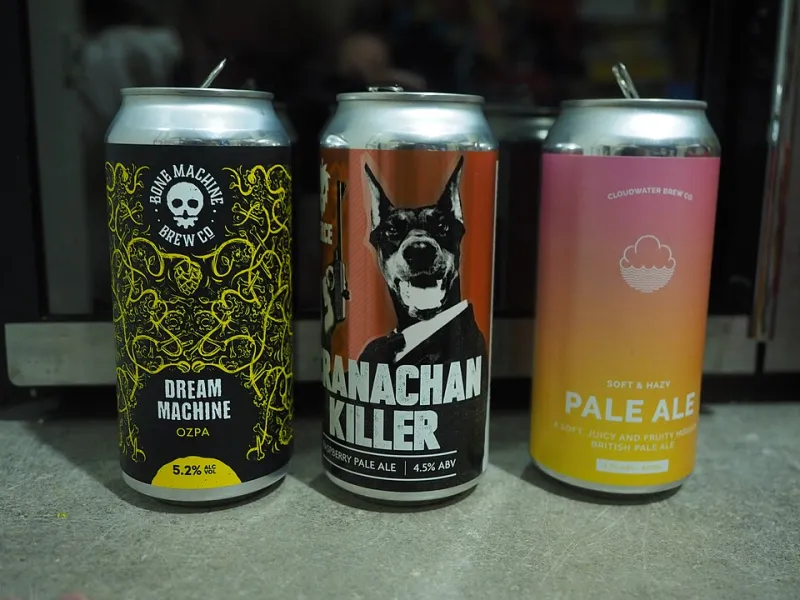
Somewhere around 2018, the shift began. Quietly at first — a mango-forward New England IPA slipping onto the board beside the West Coasts, a pastry stout commanding the same reverence that a double dry-hopped pale once had. By 2022, many of the same breweries that had built their reputations on punishing bitterness were releasing milkshake IPAs, fruit-forward sours, and hazy pales so soft they barely registered on the palate at all. The IBU had become almost embarrassing to mention.
So what happened? And should we care?
The Arms Race That Defined a Generation
To understand the retreat, you have to appreciate how thoroughly bitterness dominated British craft brewing's formative years. The movement arrived in the UK with American influences baked in — BrewDog's early flagship Punk IPA, launched in 2007, wore its hop aggression as a badge of rebellion. Smaller breweries followed suit, partly out of genuine enthusiasm and partly because high-IBU beers were a shorthand for seriousness. If your pale ale didn't slap you across the face, were you even trying?
By the mid-2010s, the competition had become almost absurd. Breweries were boasting triple-digit IBU counts on labels, dry-hopping with varieties that smelled like a pine forest after rainfall, and marketing their beers with a swagger that made the whole thing feel like a contact sport. For a certain type of drinker — and there were a lot of us — it was genuinely thrilling.
The problem was that IBUs, as a measure, were always slightly misleading. Bitterness perception is heavily influenced by residual sweetness, alcohol content, and carbonation. A 100 IBU beer isn't necessarily twice as bitter as a 50 IBU one. Brewers knew this. But the number served a marketing purpose, and marketing purposes have a way of taking on a life of their own.
The Instagram Problem
The craft beer community has never been particularly honest about the role aesthetics play in what we drink. Hazy, pastel-coloured NEIPAs photograph beautifully. A murky, orange-tinted pint glowing under bar lighting is genuinely more shareable than a clear, amber bitter, however technically accomplished the latter might be. When breweries started noticing that their hazier, sweeter releases were generating more social engagement, the commercial logic was difficult to argue with.
Fruit adjuncts accelerated the trend. A raspberry berliner weisse or a passion fruit gose offered something genuinely different — accessible to drinkers who'd never warmed to bitterness, and novel enough to keep the enthusiast crowd engaged. There's nothing wrong with any of that in isolation. The issue is when novelty becomes the only currency that matters.
By the early 2020s, some British breweries had quietly dropped their flagship IPAs entirely. Others kept them on the roster but stopped talking about them, reserving the marketing energy for whatever limited adjunct release was coming out of the small-batch kit that month. Bitterness, once a selling point, had become almost apologetic.
What the Shift Reveals About Us
It would be easy — and slightly lazy — to blame this entirely on breweries chasing trends. The truth is more uncomfortable: drinkers led the way. British palates genuinely changed. A generation of new craft beer converts came to the category through sours, fruit beers, and hazy pales. For many of them, a fiercely bitter West Coast IPA isn't a revelation — it's just unpleasant.
There's also the fatigue factor. Early adopters who spent years evangelising hop-forward ales eventually got bored. The same style, however well-executed, stops surprising you after the hundredth pint. Breweries that wanted to retain their most engaged customers had to offer something new, and something new, in craft beer's current vocabulary, usually means sweeter and softer.
None of this is unique to Britain. The same pattern played out in the American craft scene, arguably a few years earlier. But there's something particularly pointed about its impact here, given that Britain has its own bitter tradition — real ale, best bitter, the whole cask canon — that was already fighting for relevance before the craft movement even arrived. Watching craft breweries abandon bitterness feels, to some of us, like losing the argument twice.
The Brewers Holding the Line
Not everyone capitulated. A handful of British breweries — many of them older craft operations who built their identity around hop character — have quietly continued doing what they always did. They're not making headlines, and their tap takeovers don't sell out in minutes, but their beers remain some of the most technically impressive pints you can find in this country.
There's also a genuine counter-movement building. West Coast IPA, largely an American style, has been quietly gaining ground in British craft circles over the past two years. Clear, bitter, uncompromising — it's almost retro by current standards, which perhaps explains its appeal. Some drinkers who spent years chasing haze are coming back around to the clarity and precision of a well-made, properly bitter pale ale.
A few newer breweries have built their entire proposition around hop-forward beer, almost as a provocation. They're leaning into the unfashionability of it, and finding that there's a loyal, underserved audience waiting.
What We Actually Lost
Here's the honest version: we didn't lose bitterness entirely. You can still find exceptional hop-forward ales in Britain if you know where to look. What we lost was the cultural centrality of bitterness — the sense that it was the defining characteristic of serious British craft beer, the thing that separated a considered pint from a commercial one.
In its place we have variety, which is genuinely valuable. The breadth of styles available in a well-curated British tap room today is remarkable. But variety without hierarchy can become noise, and there are moments — standing at a bar scrolling through a list of adjunct stouts and fruit sours — when you find yourself craving something that simply tastes like hops. Properly, assertively, unashamedly of hops.
Maybe that's nostalgia. Maybe it's a legitimate palate preference. Probably it's both.
Either way, the bitterness debate isn't over. It's just gone quiet for a while — which, given its history, might be exactly when it's about to get interesting again.