No Signpost Required: The Brilliant British Breweries You'll Only Find If You're Really Looking
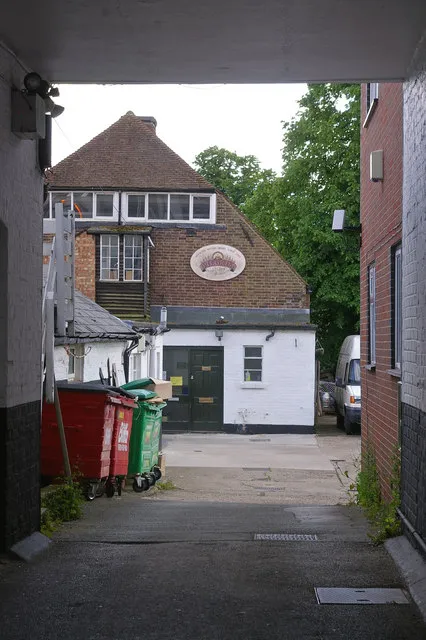
Photo: Ian Capper, CC BY-SA 2.0, via Wikimedia Commons
Let's be honest about something. The 'destination brewery' concept has become a bit of a performance. You know the type — a converted Victorian warehouse with exposed brickwork, a menu featuring small plates with interesting sourcing stories, a gift shop stocked with branded merchandise, and a tap room that's booked out on weekends three weeks in advance. The beer is often excellent. The experience is often lovely. But somewhere in all that polish, something gets lost.
The breweries that genuinely excite me lately are the ones you have to work for. The ones where the postcode takes you to an industrial estate that also houses a tyre fitter and a plumbing supplies depot. The ones where the 'tap room' is a fold-out table and four stools, open on the first Saturday of the month if you're lucky. The ones that have never been written about in a lifestyle supplement and have no plans to change that.
Britain is full of them. Here's why they matter — and how to find them.
The Geography of Unsung Brewing
There's a rough map in most craft beer enthusiasts' heads of where the good stuff comes from. London, obviously. Bristol. Manchester. Leeds. Edinburgh getting a look-in. A few approved rural idylls — the Cotswolds, parts of Yorkshire, the Wye Valley — where picturesque settings and premium pricing coexist comfortably.
What that mental map leaves out is vast. The market towns of Lincolnshire. The former mining communities of County Durham. The light industrial fringes of Swindon, Telford, Redditch. The agricultural flatlands of East Anglia beyond the Cambridge bubble. These are not glamorous locations. They don't have the infrastructure for beer tourism. There are no artisan coffee shops nearby, no boutique B&Bs, no obvious reason for a craft beer enthusiast from London to make the journey.
And yet, in units 7 and 8 of a trading estate outside a town you've driven through on the A-road without stopping, someone is making genuinely exceptional beer.
Why Unglamorous Locations Produce Honest Beer
This isn't romantic nonsense about authenticity. There are practical reasons why breweries in overlooked locations often outperform their celebrated counterparts on the thing that actually matters — what's in the glass.
When you're not running a destination venue, you don't have to split your attention. There's no front-of-house team to manage, no kitchen to oversee, no event programme to curate. The brewer can just brew. The entire commercial proposition rests on the quality of the liquid, because there's nothing else to fall back on. A mediocre taproom experience can be papered over with good vibes and a nice playlist. A mediocre beer in a plain bottle with minimal distribution has nowhere to hide.
There's also the question of rent. Premises in unglamorous locations are cheaper, which means smaller breweries can afford larger kit, better ingredients, or simply more time to experiment without the pressure of covering eye-watering overheads. Some of the most technically precise brewing in Britain is happening in buildings that look, from the outside, like they might store aggregate.
How to Actually Find Them
The honest answer is that it takes effort, and the effort is part of the point.
Local CAMRA branches remain one of the best intelligence networks in British beer. They know their patches in granular detail, including the brewery that's been quietly supplying three local pubs for years without anyone outside a ten-mile radius noticing. Their festivals and newsletters are worth your time if you're serious about this.
Beer trading forums and communities — the slightly obsessive corners of social media where people photograph labels and discuss batch numbers — are another route in. The drinkers who track down genuinely obscure bottles are usually happy to share information, and they tend to have done the legwork already.
The other approach, slower but deeply satisfying, is simply to look at a map of any region you're visiting and search for breweries registered with HMRC. Cross-reference with a Google Maps satellite view. If the building looks like it might also store pallet racking, you might be onto something.
A Few Worth the Journey
Without turning this into a formal guide — the whole point is that these places resist that kind of documentation — it's worth gesturing at the kinds of operations that reward the search.
There are breweries in the East Midlands producing cask ales of a precision that would embarrass many of their more celebrated southern counterparts, operating out of former agricultural buildings with a production capacity that would fit in a corner of a major craft operation. Their beers appear on two or three local pub handpumps and, if you're very fortunate, at a regional beer festival.
In the north-east, there are small-batch operations run by former home brewers who moved to commercial scale without ever developing the ambition to move beyond their immediate community. They brew what they like, sell what they brew, and regard the entire concept of 'brand building' with cheerful suspicion.
In Wales, in parts of Scotland, in the market towns of the Welsh Marches — the same pattern repeats. Quietly exceptional beer, made by people who got into brewing because they loved beer rather than because they had a vision for a lifestyle brand.
What Their Isolation Teaches Us
The breweries on the destination circuit are not doing anything wrong. Building a beautiful venue and a strong brand is a legitimate business decision, and many of them make extraordinary beer. But the existence of the unglamorous alternatives is a useful corrective to the idea that craft brewing is primarily a hospitality and lifestyle business.
At its core, it's about fermentation. It's about grain and water and yeast and hops and time. The breweries that strip everything back to those fundamentals — because they have to, not because it's a marketing strategy — have a clarity of purpose that's increasingly rare.
Going to find them, getting mildly lost on a B-road, eventually locating a unit with a hand-painted sign and a small car park, and being handed a pint that genuinely surprises you — that's not just a pleasant afternoon. It's a reminder of what craft brewing was supposed to be about before it became a conversation about brand identity and tap room design.
The beer is worth the drive. It almost always is.