Fill It Up and Take It Home: How Britain Learned to Love the Takeaway Pint Again
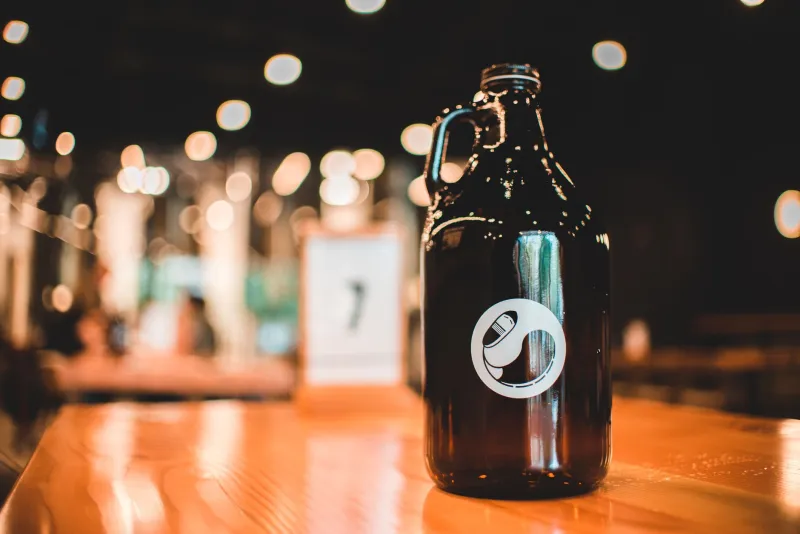
There's something almost ceremonial about it. You hand over your vessel — a two-litre swing-top flagon, perhaps, or a proper stainless-steel growler with a brewery logo worn soft from repeated use — and watch as someone behind the counter fills it with something genuinely worth drinking. It takes a minute. There's a bit of foam to manage. You carry it home like it matters, because it does.
The takeaway beer culture that quietly exploded during lockdown was supposed to be a stopgap. A workaround. Something people would abandon the moment pubs reopened and life returned to normal. Except it didn't quite work out that way. Across Britain — from Bristol's independent bottle shops to small-batch taprooms in Leeds, Edinburgh, and beyond — growlers, mini-kegs, and refillable containers have gone from emergency measure to permanent fixture. And the people running these businesses will tell you, without much hesitation, that the demand hasn't softened one bit.
How We Got Here
Growlers aren't new. In America, the large refillable jug has been a craft beer staple for decades, closely associated with the rise of the microbrewery scene in the 1990s. In Britain, the concept arrived more tentatively — you'd spot them at beer festivals, occasionally at a particularly forward-thinking taproom, but they never really broke into mainstream drinking habits.
Then came 2020. With pubs shuttered and off-licences doing brisk business, breweries scrambled to get their beer directly into people's hands. Many turned to canned and bottled formats. Others leaned into takeaway draught — filling whatever vessels customers brought to the door, selling branded containers alongside, and discovering something unexpected: people loved it. Not just as a substitute for the pub, but as a ritual in its own right.
The numbers backed this up. Independent off-trade sales surged. Craft-focused bottle shops reported record footfall. And when restrictions lifted, the habit didn't evaporate — it evolved.
The Breweries Making It Work
Bristol's Left Handed Giant has long positioned itself as a brewery that takes the drinking experience seriously, whether that's inside its Finzels Reach taproom or via what leaves through the door. Their growler fill station became a talking point during the pandemic and has remained so since. Regulars come in mid-week specifically to refill — treating it less like a transaction and more like a visit to a trusted local.
Up in Manchester, Cloudwater Brew Co. — arguably the brewery that did more than any other to shift British drinkers towards a craft-first mindset — invested heavily in their retail offering during lockdown. Their approach was precise: cold storage, careful handling, clear guidance on how long a filled growler would stay in good condition. That kind of rigour matters. One of the persistent criticisms of growler culture is inconsistency — beer that travels poorly, oxidises too quickly, or arrives at the glass in noticeably worse shape than it would at the bar. Cloudwater's answer was to treat the takeaway format with the same seriousness as anything poured on-site.
Smaller operations have been equally inventive. Brew York, the York-based brewery and taproom, offers a rotating selection of fills alongside their canned range, and the theatre of choosing what goes in the jug — seasonal specials, limited releases, the odd collaboration — has become part of the draw. It's not just about convenience. It's about access to beers that don't always make it into distribution.
On the retail side, independent bottle shops have been the unsung heroes of this resurgence. Shops like Hop Burns & Black in South London, or Beers of Europe out in Norfolk, have cultivated a clientele that takes its home drinking seriously. Growler fills aren't universally offered — the logistics of maintaining draught lines in a retail environment are considerable — but those that do it well have built fierce loyalty.
The Case for Drinking at Home
Ask a committed home beer drinker why they bother with all the fuss of fills and flagons when they could just buy cans, and you tend to get the same answer: freshness. A well-maintained draught line, properly purged and cold, will deliver beer in a state that most canned formats simply can't replicate. The carbonation is different. The texture is different. For certain styles — hazy IPAs, unfiltered lagers, anything delicate and aromatic — the gap between fresh draught and packaged product can be genuinely significant.
There's also something to be said for the ritual itself. Selecting a beer, making the trip to fill it, choosing the right glass at home, perhaps pairing it with food you've actually thought about — it's a considered experience. The pub, for all its virtues, doesn't always offer that kind of control. You drink what's on, at whatever temperature the cellar happens to be running, in whatever glass the bar provides.
But What About the Pub?
Here's where things get interesting, and a little uncomfortable. The pub isn't just a place to drink beer — it's a social institution, a community anchor, a space that has shaped British culture in ways that no kitchen counter can replicate. The concern, voiced quietly by landlords and beer writers alike, is that every excellent pint drunk at home is a pint not drunk in a pub. And pubs, as anyone paying attention knows, are not in a comfortable position right now.
It's a fair worry, but perhaps a slightly false binary. The people filling growlers at a taproom on a Saturday afternoon are, by and large, not replacing pub visits — they're adding to them. They're the same drinkers who turn up for tap takeovers, who plan weekends around brewery tours, who treat a good pub like a destination. Taking beer home is part of a broader enthusiasm, not a retreat from it.
What it does challenge is the idea that exceptional beer can only be experienced in a licensed premises. That particular orthodoxy has been loosening for years — the explosion of quality canned craft beer made sure of that — and growler culture is simply the next expression of the same shift. The pub remains irreplaceable for what it does socially. But it no longer holds a monopoly on what it does sensorially.
The Practical Bit
If you're new to growler fills, a few things are worth knowing. Stainless steel insulated growlers keep beer colder for longer and are less prone to light damage than glass — worth the investment if you're going to do this regularly. Always rinse your container thoroughly before a fill and let it drain completely; residual water is the enemy of carbonation. Ask the person filling it how long the beer will keep — most draught fills are best consumed within 24 to 48 hours, though some styles hold better than others. And treat it cold from the moment it's filled to the moment it's poured.
The breweries doing this well will tell you all of this without being asked. That level of care is, in many ways, the whole point.
A New Kind of Beer Culture
Britain's relationship with beer has always been evolving — from the tied house system to the CAMRA revolution, from lager's long dominance to the craft explosion of the 2010s. The growler's quiet comeback is just the latest chapter: a generation of drinkers who care deeply about what's in their glass, wherever that glass happens to be.
The pub isn't going anywhere. But neither, it seems, is the flagon on the kitchen shelf.