They Know Your Pint Before You Ask: The Landlords Keeping Britain's Pub Soul Alive Without a Single App
They Know Your Pint Before You Ask: The Landlords Keeping Britain's Pub Soul Alive Without a Single App
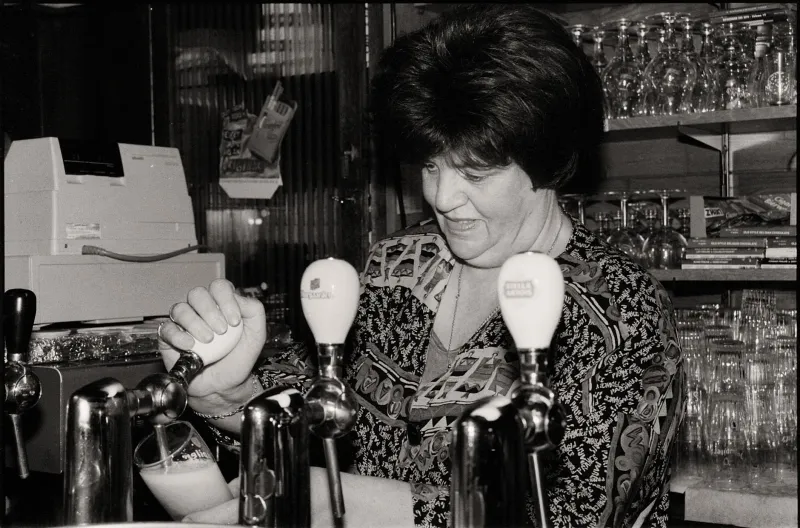
There's a particular kind of magic that happens in a certain sort of British pub. You push open the door, shake the rain off your jacket, and before you've even made it to the bar, a pint is already being pulled. Nobody asked. Nobody needed to. The landlord just knew.
It sounds small. It isn't. That moment — that quiet act of recognition — is one of the things that separates a genuinely great local from a place that merely sells alcohol. And increasingly, it's a skill under threat.
The Art of Knowing Without Being Told
Margaret Howell has run the Fox & Anchor in a small Shropshire market town for going on twenty-three years. She doesn't use a loyalty card system. She doesn't have a digital ordering tablet propped up on the bar. What she does have is an almost uncanny recall for the preferences of the 200-odd regulars who pass through her doors across any given week.
"Dave takes his bitter slightly warmer than most — he told me once it was how his dad used to drink it, and I've never forgotten," she says, nodding towards a corner table where a man in his sixties is already settled in with a copy of the Racing Post. "Sandra on a Friday will have a half of the golden ale first, then switch to stout. Don't ask me why. It's just what she does."
This is muscle memory applied to hospitality. Not the mechanical kind — the deeply human kind, accumulated over years of paying attention. Margaret couldn't tell you exactly when she logged each preference. She just did, the way a craftsperson absorbs technique without consciously cataloguing every lesson.
Ask her whether she's ever considered a digital system to manage all this, and she laughs in a way that suggests the question is slightly absurd. "A screen can't read someone's face when they've had a hard week. It can't make a judgement call about whether tonight's the night to pour a slightly bigger measure and not charge for it."
What Gets Lost When a Pub Becomes a Transaction
The shift towards app-based ordering, table service QR codes, and digital loyalty schemes accelerated sharply during the pandemic years, and for understandable reasons. But the convenience those tools offered came packaged with something less welcome: a subtle but significant depersonalisation of the pub experience.
When you tap your order into a phone, you're engaging with a system. When you walk to a bar and exchange a few words with someone who genuinely knows you, you're engaging with a community. These aren't equivalent experiences, however efficient the former might be.
Rob Featherstone, who has held the licence at a Victorian terrace pub in Sheffield for sixteen years, puts it plainly. "People come in here because they want to feel like they belong somewhere. The pint's part of it, obviously — we work hard on the tap list — but it's the belonging that keeps them coming back. An app can't give you that."
Rob has a particular gift for remembering not just what people drink, but how they like it poured. One regular insists on his pale ale served with a loose, generous head. Another — a former landlord himself — wants his cask bitter pulled slow and topped off only once the first settle has dropped. "He'd know immediately if I rushed it," Rob says. "And he'd be right to pull me up on it."
This kind of knowledge isn't just about customer service. It's a form of craft in its own right.
The Geography of the Regular
Beyond the pint itself, Britain's best landlords have always held a mental map of their pub — who sits where, and why. The widow who takes the window seat by the left-hand side of the bar because the afternoon light falls there and she likes to read. The group of retired teachers who colonise the back snug every Tuesday without fail. The young bloke who always perches at the bar end closest to the door, ready to slip away if his phone goes.
In Whitstable, Kent, Pauline Archer has run a seafront local for just over two decades. The pub has a compact main bar and a small rear room that most visitors never find. Pauline knows exactly who gets directed to the back room and who gets kept at the bar.
"Some people come in wanting company, even if they don't say so. You put them at the bar, you make sure there's a conversation available if they want it. Others need peace. You can tell. You learn to tell."
Pauline has also, quietly, become an expert in the specific cask ales her regulars prefer from particular breweries — not just styles, but actual producers. "Brian won't touch anything from more than forty miles away. Doesn't make a fuss about it, just doesn't order it. I know what to put on for him and what to leave off."
Are Younger Landlords Learning the Old Ways?
The concern, voiced quietly among beer enthusiasts and pub industry observers alike, is that this kind of knowledge is generational — that it will retire when its current custodians do, replaced by efficiency-driven models that optimise for throughput rather than belonging.
But there are reasons for cautious optimism. A growing number of younger publicans, many of them drawn into the trade through a genuine passion for craft beer rather than simply falling into it, seem to understand instinctively what's at stake.
Jamie Okafor took on a community local in Nottingham four years ago at the age of thirty-one. He came via the craft beer scene, with stints at two well-regarded taprooms on his CV. He is, by any measure, a digital native. He also refuses to install table ordering.
"I watched what happened to some of the taprooms I worked at when they went fully app-based," he says. "They became quieter in a way that had nothing to do with how many people were in. The noise of actual conversation just... dropped. People were looking at their phones instead of talking to each other. To me, that's a failure, regardless of what the till receipts say."
Jamie has made a deliberate effort to build the kind of knowledge that his older counterparts accumulated over decades. He keeps a notebook — not a CRM system, an actual notebook — with observations about regulars' preferences. He reviews it on quiet afternoons. "It probably sounds obsessive," he admits. "But I'd rather be obsessive about knowing my customers than about optimising my margins."
The Pint as a Point of Connection
At the heart of all this is something that the craft beer community, for all its enthusiasm about provenance and process and flavour profiles, sometimes undervalues: the context in which a beer is consumed matters enormously. The best pint you've ever had probably wasn't just about what was in the glass.
It was the landlord who remembered your name after your second visit. The bar staff member who'd already started pulling your usual before you'd taken your coat off. The sense that you were, in some modest but meaningful way, known.
That feeling doesn't come from an algorithm. It comes from years of genuine attention — from landlords like Margaret, Rob, Pauline, and Jamie, who have chosen to treat their locals not as venues to be managed, but as communities to be tended.
The apps will keep coming. The digital ordering systems will get slicker. But as long as there are publicans willing to do the harder, slower, more human work of simply paying attention, Britain's best locals will remain something no piece of software can replicate.