Rivals in the Brewhouse: What Actually Happens When Competing Breweries Share a Mash Tun
The first phone call, by all accounts, was terrible. Two breweries who in any other industry would be rivals — competing for the same bars, the same fridge space, the same drinkers — agreed to brew a beer together, and neither quite knew how to talk about it.
'There was a lot of, um, and er,' the brewer at the smaller of the two operations admits. 'We'd spent three years quietly trying to pinch each other's accounts. Now we were meant to share recipes.'
Eighteen months later, that awkward call has grown into something unusual even by craft beer's friendly standards: a rolling collaboration involving five breweries from across the north of England, each taking turns hosting, each bringing one ingredient or technique to the table, each splitting the batch. Their latest release — a mixed-fermentation ale aged in whisky casks — was gone in under four hours.
The Etiquette of Sharing a Brewhouse
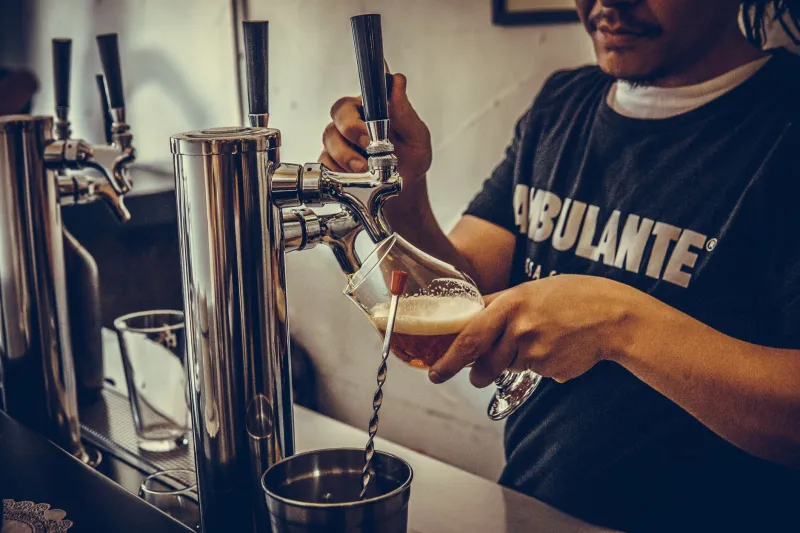
Collaboration brewing has its own unspoken rules, and they're stricter than you'd expect. The host brewery provides the kit, the water and the cleaning rota. The guests bring ideas, not opinions about the host's processes. Arguments about hopping rates are settled by whoever's recipe is being brewed that day, full stop.
There's also a hierarchy of humility. 'The whole point is you do the jobs you'd normally delegate,' one participant explains. 'I've spent collab days weighing out grain at seven in the morning and scrubbing the fermenter at nine at night. Nobody sends an assistant. That's the whole point.'
Why bother? Partly economics — sharing a brew day spreads the cost of expensive ingredients like rare hops or barrel-aged stock. But mostly, the brewers say, it's about what happens in the gaps: the techniques picked up over a kettle, the shortcuts learned, the honest feedback you can only get from someone who knows exactly how hard your job is.
Why It Works Here
There's something distinctly British about the whole arrangement. Britain's craft scene grew up in a country where breweries are small, margins are thin, and the pub trade they all depend on is under real pressure. Competing into oblivion helps nobody. Lending each other a hand — a pallet of malt here, a spare fermentation tank there — has always been how the sector has survived.
The collab brew, then, is less a marketing gimmick than a working model of how the industry actually functions when nobody's watching. Rivals share a mash tun, split the batch, and walk away knowing each other's secrets.
Does it always work? No. One brewery pulled out of the project after a disagreement over who'd copped for the cask costs. Another collaboration produced a beer so divisive it barely shifted a keg. But even the failures, they insist, taught them more than a year of brewing alone.
Next time you spot a collaboration label on the tap list, look closer. Somewhere behind that beer is a seven-a.m. grain lift, an argument about hopping rates, and two breweries who used to be rivals — and now ring each other when the chiller breaks down. That, more than any single pint, is Britain's craft beer secret weapon.