Seeds of Something Old: The Brewers and Farmers Bringing Britain's Lost Barleys Back to Life
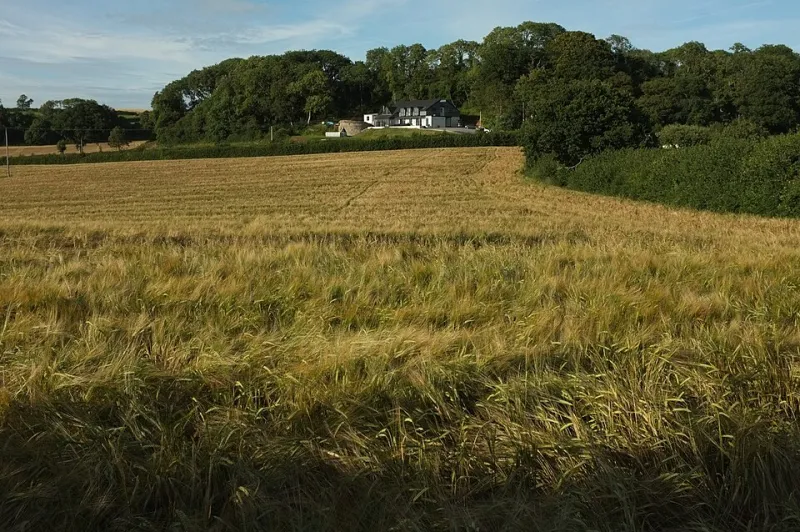
Photo: Derek Harper , CC BY-SA 2.0, via Wikimedia Commons
In a seed bank in Watlington, Oxfordshire, sits a collection of barley varieties that most modern maltsters have never heard of. Spratt Archer. Plumage Archer. Chevallier. Maris Otter's older, stranger cousins — grains that shaped the character of British beer for centuries before being quietly displaced by higher-yielding modern varieties bred for agricultural efficiency rather than flavour.
They're not extinct, exactly. But until recently, they were close enough to it that most people in the industry had stopped thinking about them at all.
That's changing.
Why Heritage Barley Disappeared in the First Place
To understand the revival, you need to understand the disappearance. Through the mid-twentieth century, British agriculture underwent a dramatic transformation. Yields became the primary metric of success, driven by the economics of post-war food production and later by the demands of large-scale industrial brewing. Varieties that produced abundant grain with consistent, predictable characteristics were favoured; those that grew more slowly, yielded less, or behaved unpredictably in the malting house were gradually abandoned.
The result was a narrowing of the genetic base of British malting barley that was, from a purely agricultural standpoint, quite rational. From a flavour standpoint, it was a quiet catastrophe. Many of the discarded varieties possessed taste profiles of considerable complexity — earthy, nutty, biscuity, occasionally almost spiced — that modern barleys, optimised for yield and extract efficiency, simply cannot replicate.
Andy Hirst, who farms heritage grains on the Yorkshire Wolds and supplies a handful of pioneering breweries, describes the difference in blunt terms. "Modern barley is a very good product. But it's been bred to disappear into beer. The old varieties were bred to be the beer."
The Farmers Keeping the Flame
The survival of these varieties owes much to a small network of dedicated farmers and seed custodians who continued growing them on a tiny scale, largely out of historical interest. Organisations like the Watlington Seed Library and the Heritage Seed Library at Garden Organic have preserved genetic material that would otherwise have vanished entirely.
In recent years, a growing number of farmers have begun scaling up production of these varieties, encouraged by demand from brewers willing to pay a premium for something genuinely different. It's not a straightforward commercial proposition — heritage barleys typically yield significantly less per acre than modern varieties and can be more demanding to grow — but for farmers with the right land and the right markets, the economics are increasingly viable.
Hirst began growing Chevallier barley, a variety that dates to the early nineteenth century and was once among the most prized malting barleys in Britain, after a conversation with a brewer at a food festival in 2018. "She said she'd been looking for it for years. I thought, well, I've got the seed. Let's try."
What These Barleys Actually Taste Like
The flavour question is, for most drinkers, the most immediately interesting one. And the honest answer is: it depends enormously on the variety, the maltster, and the brewer.
Chevallier tends to produce beers with a pronounced biscuity depth, a gentle earthiness, and a sweetness that lingers on the finish in a way that modern pale malt rarely achieves. Beers brewed with it tend to feel more textured, more layered — less clean in the clinical sense, but more satisfying in the experiential one.
Plumage Archer, another historic variety now being revived by a small number of farms in East Anglia, lends a nuttier, slightly more rustic character. It suits traditional British styles — bitters, milds, porter — in a way that feels almost preordained, as if the beer styles and the grain evolved together, which of course they did.
Spratt Archer, perhaps the most obscure of the varieties currently seeing revival, produces something more unusual: a slightly herbal, almost savoury quality that brewers have found works remarkably well in longer-fermented or aged beers.
The Breweries Leading the Way
A number of British breweries have become particularly associated with heritage grain brewing. Crisp Malt in Norfolk has been instrumental in making heritage varieties available to a wider range of producers by working directly with farmers to develop commercially viable malt. Their Chevallier Heritage Malt has now found its way into beers from producers across the country.
In Shropshire, a small farmhouse brewery has built its entire range around heritage and landrace grains, working with a network of local farmers to source varieties that have never been commercially malted before. Their beers are available in extremely limited quantities and have developed a following that extends well beyond the local area.
In Scotland, where barley has always been central to national identity (whisky has a way of concentrating the mind on grain quality), several craft breweries have begun collaborating with heritage grain projects at the James Hutton Institute in Dundee, exploring varieties that shaped Scottish beer and whisky production before the twentieth century narrowed the field.
Sustainability and the Longer View
Beyond flavour, there's a sustainability argument for heritage grain cultivation that's worth taking seriously. Genetic diversity in agricultural crops is a form of resilience — a buffer against disease, climate stress, and the unforeseen challenges that monocultures are particularly vulnerable to. Maintaining a wider range of cultivated barley varieties isn't just good for beer; it's good for the long-term health of British arable farming.
Hirst is cautiously optimistic about where things are heading. "Five years ago, I'd have said this was a niche interest. Now I've got three breweries fighting over my Chevallier crop. Something has shifted."
That shift is producing some of the most interesting British beer currently being made — beer that tastes of somewhere specific, of something old, of a connection between land and glass that modern brewing often struggles to articulate. It's worth seeking out. And if you find a pub that stocks it, order a second one before you've finished the first.