The Great Uncoupling: When the Craft Beer Faithful Finally Stopped Defending Their Favourites
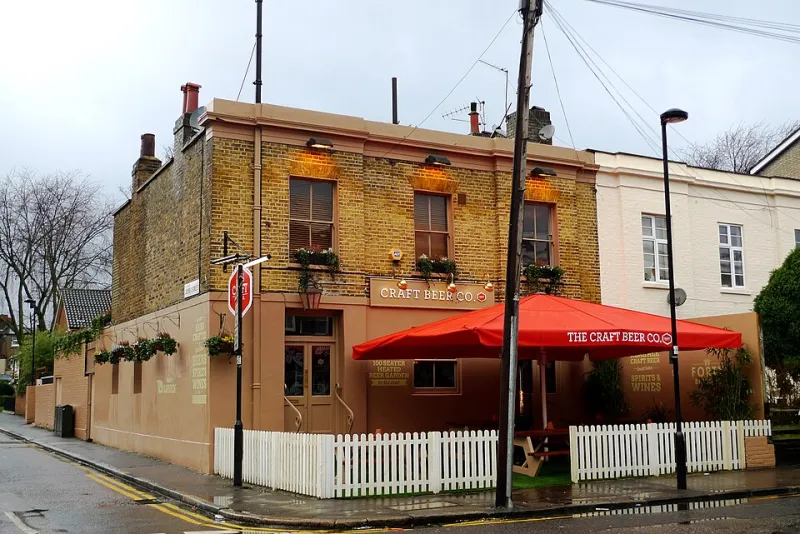
Photo: Ewan-M, CC BY-SA 2.0, via Wikimedia Commons
Mark has been drinking craft beer since before most people in Britain knew what the phrase meant. He found his first favourite brewery — a small operation in the north of England — through a CAMRA festival in 2011, bought their beers obsessively for eight years, and spent a not-insignificant portion of his social energy introducing other people to them. He wasn't just a customer. He was an evangelist.
He bought his last can from them in 2022.
"It wasn't one thing," he says, the kind of careful phrasing that suggests he's thought about this more than he'd like to admit. "It was gradual. The beers got a bit less interesting. The prices went up. They started doing collabs with brands that felt completely off — nothing to do with the thing I'd loved. And then one day I realised I hadn't thought about them in months. That was when I knew it was over."
Mark's experience is not unique. Across British craft beer, a quiet reckoning is taking place. The drinkers who formed the early, passionate core of the movement — who carried breweries through their uncertain first years on the strength of word of mouth and genuine enthusiasm — are, in growing numbers, moving on. Not dramatically. Not with manifestos. Just... away.
The Currency of Early Loyalty
To understand what's being lost, you have to understand what early craft beer loyalty actually meant. This wasn't brand loyalty in the conventional, marketing-department sense. Nobody was being retained by a points scheme or a loyalty card. The attachment was personal, almost tribal.
These were breweries founded by people who genuinely cared about beer in a way that felt different from the corporate norm. Their founders were often accessible — at festivals, at the bar, on social media in the days when social media still felt conversational. The beer was frequently rough around the edges, the branding was sometimes amateurish, and that was part of the charm. You were rooting for someone, not just buying a product.
When those breweries struggled — and most of them did, at some point — their loyal drinkers didn't just carry on buying. They advocated. They told their colleagues, their families, their local pub landlords. They were, in effect, an unpaid sales force motivated entirely by genuine affection.
The question now is: what did those drinkers get in return? And is it still enough?
The Expansion Problem
Growth is the most common villain in these stories, though it's an unfair one. Breweries that succeed have to make decisions about scale, and those decisions inevitably change things. A ten-barrel kit becomes a thirty-barrel kit. A local distribution deal becomes a national one. The founder who used to pour your pint at the bar is now managing a team of twelve and talking to investors.
None of that is inherently wrong. But it tends to have consequences that loyal early drinkers feel acutely.
Consistency becomes harder to maintain at scale, and the drinkers who know a brewery's beers intimately are the first to notice when something's off. A flagship pale that was once full of character can start to feel ironed out — technically correct, commercially sensible, but missing the thing that made it worth caring about. Breweries that expanded rapidly during the mid-2010s craft boom are disproportionately represented in these conversations.
Sarah, who runs a beer club in the Midlands and has been active in the craft community since the early days, puts it plainly: "When a brewery is small, every batch feels like they made it for you. When they're big, every batch feels like they made it for the supermarket buyer. That's not always fair, but it's how it feels."
The Rebrand as Rupture
Few things alienate loyal drinkers faster than a rebrand that signals a change in values rather than just aesthetics. There's a difference between updating your labels because they've dated — entirely reasonable — and redesigning your entire identity to appeal to a demographic that has never heard of you. The latter tends to read, rightly or wrongly, as a rejection of the people who got you here.
Several British breweries that underwent significant visual rebrands in the late 2010s and early 2020s found that their most vocal early supporters were also their most vocal critics of the change. The complaints weren't really about fonts or colour palettes. They were about what the new look represented — an aspiration to a different audience, a different market position, a different version of the brewery's identity.
For drinkers who had invested emotional energy in the original version, that's a difficult thing to absorb.
What the Breweries Think
It would be easy to present this as a straightforward story of betrayal — passionate fans abandoned by commercial success. The reality, as the breweries tell it, is considerably more complicated.
One founder, who asked not to be named, speaks with evident frustration about the expectation that a brewery should remain static to satisfy its original audience. "We grew because people loved what we made. Growing meant changing some things. If we'd stayed small, we'd probably have closed. Would that have been better for the people who loved us?"
It's a fair point. The British craft beer market has become brutally competitive, and the breweries that haven't adapted — haven't scaled, diversified, or broadened their appeal — have, in many cases, disappeared entirely. The ones that survived are the ones that made difficult decisions. Some of those decisions disappointed loyal drinkers. The alternative may have been no brewery at all.
What Comes After
The interesting thing about the drinkers who've walked away from their original favourites is that most of them haven't walked away from craft beer. They've redistributed their loyalty — often to smaller, newer breweries that remind them of what they first loved about the movement. The cycle, in other words, is repeating.
There's a certain poignancy to that. The breweries now receiving the passionate advocacy of disillusioned early adopters are, in most cases, going to face the same pressures eventually. Success, if it comes, will bring the same choices. And some of the drinkers now evangelising for them will, a decade from now, be having the same conversation that Mark had about the brewery he used to love.
Perhaps that's just how it goes. Movements have phases. Relationships with brands — even brands you genuinely believed in — have natural lifespans. The craft beer community built something remarkable in Britain over the past fifteen years, and the fact that its most devoted members are now old enough and experienced enough to feel genuine disillusionment is, in its own way, a sign of maturity.
It still stings, though. Ask Mark.